
PROJECTS / 01
Starting with a question at the edge of immunity.
Our first research focus is peptide–MHC binding: one early step in how the immune system encounters pieces of the biological world.
THE BIOLOGY
A small interaction with wide implications.
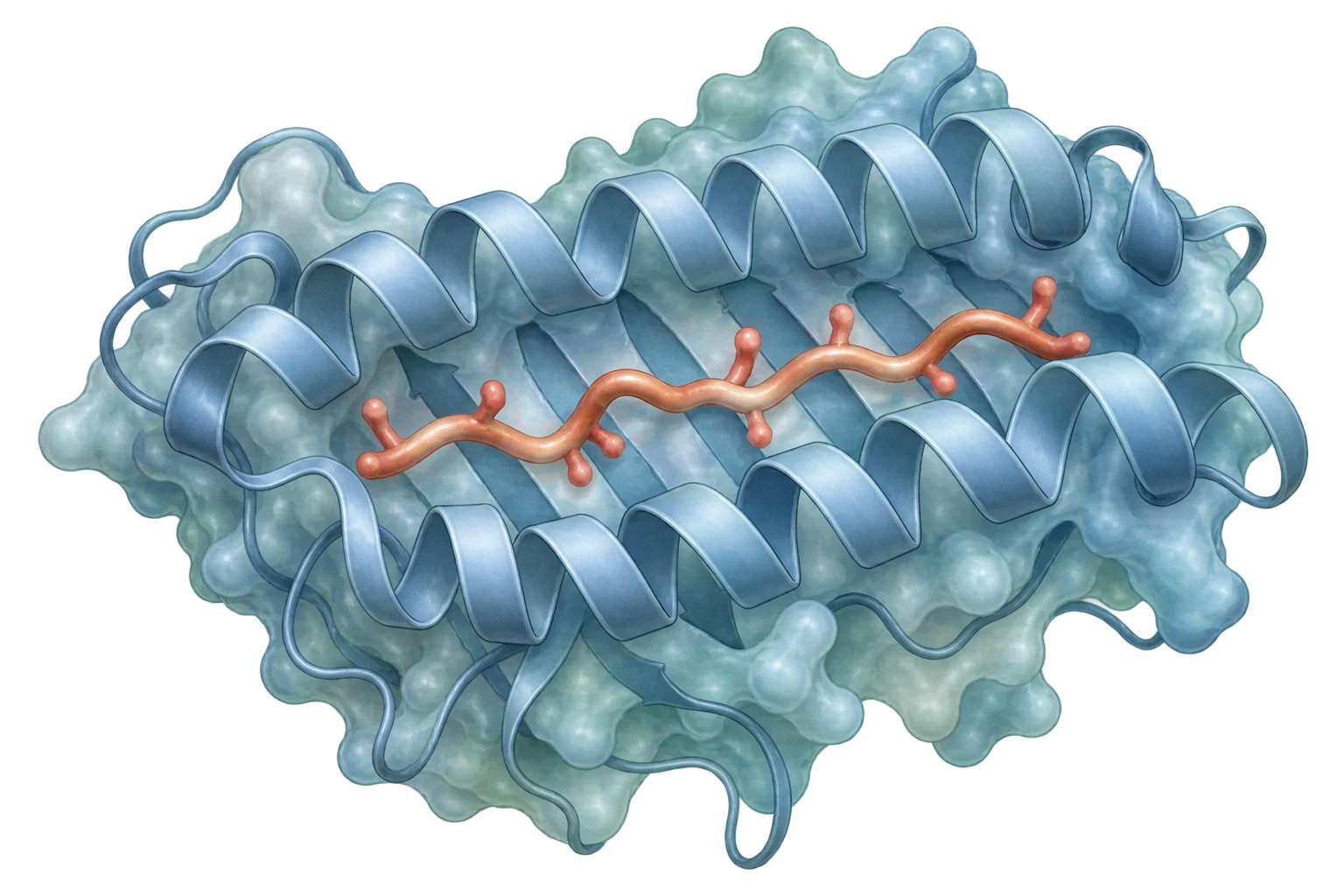
MHC proteins can bind short peptide fragments and display them for immune surveillance. Which peptides bind depends in part on the MHC variant. That makes binding a useful question to study, even though it is only one part of a larger biological process.
We’re asking whether adaptive search can learn from binding feedback and prioritize promising peptides across a large candidate space. The goal is a better-supported set for follow-up evaluation, with biological claims reserved for appropriate experiments.
WHERE WE ARE
Early work. Open questions.
This is exploratory computational research. We are developing the tools and questions for the work; we are not reporting a discovered therapeutic candidate or a validated biological result.
Binding alone does not establish that a peptide is presented on a cell, recognized by T cells, or useful as a medicine. Those questions call for other evidence.
THE BROADER IDEA
Learn from each search. Ask a better question.
This first focus is one place to explore how reinforcement learning might contribute to biological discovery. Our first research note explains the question and how we plan to evaluate it.
Read the first research note